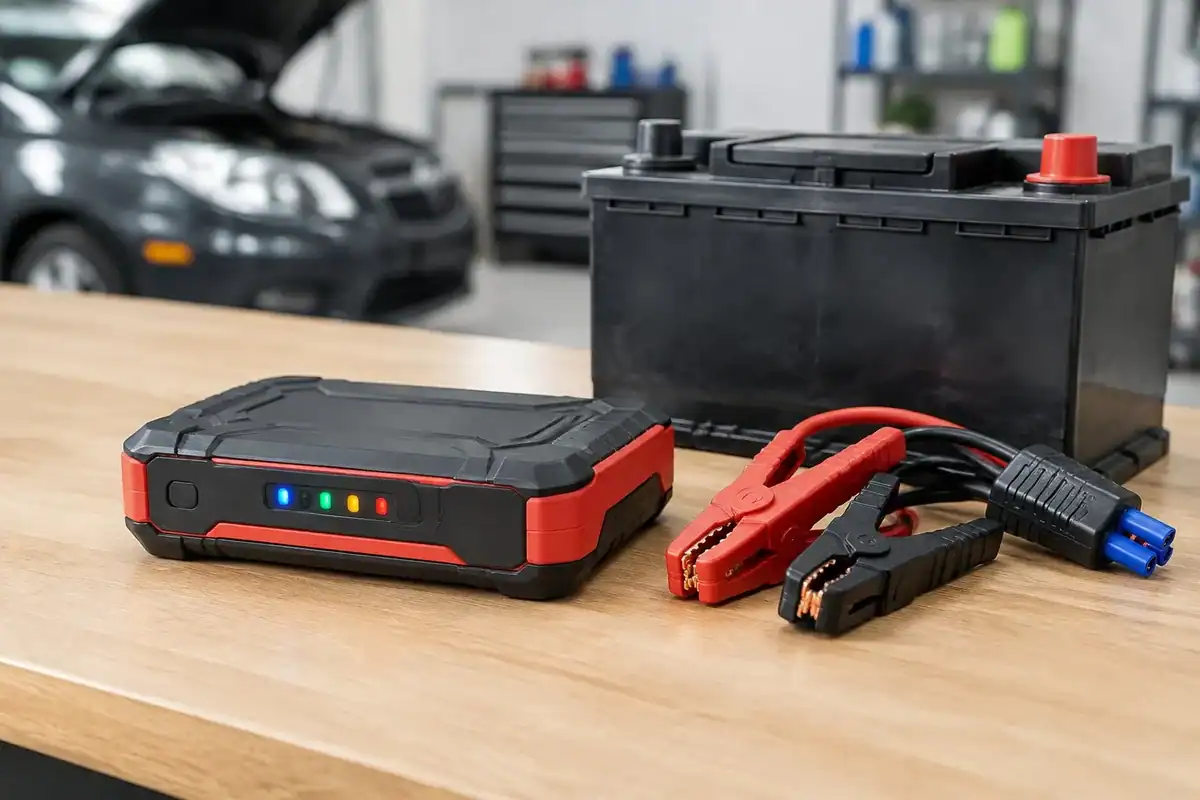
When the NOCO Boost GB40’s Boost LED is off, the unit cannot detect a battery; the documented explanation is a connected 12-volt lead-acid battery below 2 volts.
That reading tells you about battery detection, not the exact condition of the battery or the cause of every light pattern.
What Does an Off Boost LED Mean?
An off Boost LED means the GB40 cannot detect a battery. The documented threshold is below 2 volts, so the light alone does not establish that the jump starter has failed.
The LED Indicates That the Unit Cannot Detect a Battery
When the Boost LED stays off, read it as a detection status: the unit has not detected a battery for jump-starting. That is the specific meaning given for this indicator. It does not identify why the battery is undetected, and it does not provide a diagnosis of the vehicle.
Start by checking that the clamps are connected to the battery terminals and that the battery is the type the GB40 is designed to jump-start. If the clamps seem secure, the battery’s voltage is a useful next check. An off light can be consistent with a deeply discharged battery, so treating it as a confirmed equipment fault could lead you away from the issue the indicator is describing.
The Documented Threshold Is Below 2 Volts
The GB40’s stated detection limit gives you a practical point of reference: a battery below 2 volts falls outside its normal detection range. A reading below that level fits the documented reason for an off Boost LED. The light itself does not display the battery’s voltage, so you need a separate way to check it if you want to distinguish a low-voltage condition from a connection issue.
A reading at or above 2 volts does not, by itself, prove why the Boost LED is off. Check that your measurement is for the vehicle battery and that the clamps make proper contact. If those checks do not clarify the condition, use the GB40’s operating instructions or contact NOCO support before assuming the unit has a fault.
Why Might a Battery Below 2 Volts Go Undetected?
A deeply discharged battery can fall below the GB40’s documented detection threshold, leaving the Boost LED off. The unit is designed for a defined battery type and voltage range, so the indicator should be interpreted within those conditions.
The GB40 Is Designed for 12-Volt Lead-Acid Batteries Down to 2 Volts
The GB40 is specified to jump-start 12-volt lead-acid batteries down to 2 volts. If the battery voltage drops below 2 volts, the unit cannot detect it through the normal Boost function. That explains how the battery can be connected while the Boost LED remains off.
This threshold helps you decide what to check next. Confirm that you are dealing with a 12-volt lead-acid battery, then check its voltage if you have a suitable meter. A battery below the stated limit fits the documented explanation; a different battery type or an above-threshold reading does not establish the cause of an off light.
What the LED Does—and Does Not—Tell You
The off Boost LED tells you the GB40 cannot detect a battery. It does not reveal an exact voltage, confirm that the battery is healthy, or identify a particular vehicle problem. You need a voltage measurement to know whether the battery is below 2 volts.
Keep the indicator’s meaning narrow when you troubleshoot. A light that is off does not, on its own, establish that the GB40 is damaged or that the vehicle battery must be replaced. Check the battery type, voltage, and clamp contact first. If the indicator behavior does not fit those checks, consult the GB40 instructions or NOCO support for guidance specific to the unit.
How Does Manual Override Work on the GB40?
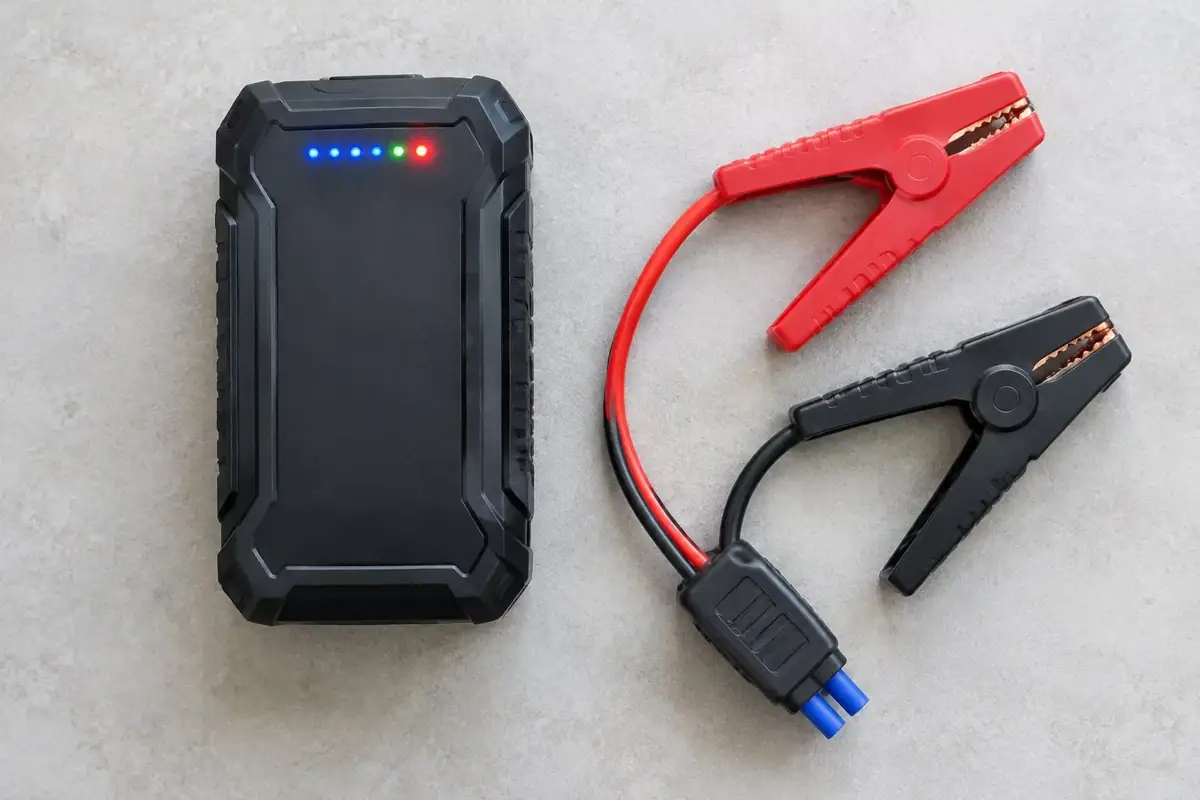
Manual Override forces the jump-start function on when the GB40 cannot detect a battery below 2 volts. It comes with a critical safety trade-off: activating it disables all safety features and does not add power to the unit.
When NOCO Describes Using Manual Override
Manual Override is intended for the situation in which you need to jump-start a battery below the normal detection threshold. The GB40’s regular Boost function cannot detect that battery, so the override lets you force the jump-start function on. The feature addresses detection; it does not raise the battery’s voltage or increase the GB40’s output.
That distinction matters when you decide whether to proceed. Manual Override does not make a battery suitable for jump-starting, confirm that the battery can accept a jump, or resolve a poor clamp connection. Check the battery and connections before activating the feature, and do not treat the override as a general fix for any warning light.
How to Activate It: Hold the Button for Three Seconds
To activate Manual Override, press and hold the Manual Override button for 3 seconds. The documented indication is that the Charge LEDs start to chase. This is the described signal that the override has been activated.
Follow the GB40’s button and LED labels carefully. The specified activation signal is the Charge LEDs chasing; do not substitute an assumed flashing pattern on the Boost LED. If the expected indication does not appear, stop and check the product instructions before attempting to use the clamps.
Manual Override Disables All Safety Features
When you activate Manual Override, all safety features are disabled. That removes protections you normally rely on while connecting the jump starter, so you must take extra care to verify positive and negative terminal placement before proceeding. Keep the clamps from touching each other and follow the GB40’s safety instructions.
If you are uncertain about the battery terminals or the correct connection, do not activate the override. A mistaken connection during a mode with safety features disabled creates a serious risk. Ask a qualified automotive professional or contact NOCO for help if you cannot confirm the correct setup.
Manual Override Does Not Provide Additional Power
Manual Override forces the jump-start function on, but it provides no additional power. It changes whether the GB40 engages when the battery falls below its detection threshold; it does not increase the unit’s capacity.
For that reason, an unsuccessful attempt does not mean you should keep repeating the override. Check the battery condition and connections, and follow the unit’s instructions. If the vehicle still will not start, get professional assistance to determine whether the battery or another part of the starting system needs attention.
What Should You Do When the Boost LED Is Off?
When the Boost LED is off, first check whether the battery is below 2 volts and whether the clamps are connected correctly. Consider Manual Override only if you understand that it disables every safety feature.
Check Whether the Battery May Be Below the Detection Threshold
Confirm that the battery is a 12-volt lead-acid type, then check its voltage with an appropriate meter if one is available. A reading below 2 volts matches the documented condition for an off Boost LED. If your reading is at or above that threshold, the indicator alone does not identify the cause.
Inspect the clamp placement and contact before drawing a conclusion. Make sure the positive clamp is on the positive terminal and the negative clamp is on the negative terminal, using the markings on the battery. If you cannot confirm the voltage or correct polarity, pause and get assistance instead of guessing.
Understand the Documented Override Behavior Before Proceeding
Manual Override is an option for a battery below 2 volts, not a routine response to any off light. Before using it, recognize that it forces the jump-start function on while disabling all safety features. It does not supply additional power, so it cannot compensate for a weak unit or fix a poor connection.
Proceed only if you can verify the battery terminals and follow the GB40’s instructions safely. If the battery is not below the stated threshold, or you are unsure of the battery type or polarity, do not use the override as a trial-and-error step. Ask NOCO or a qualified automotive professional for guidance.
What Can the Available Indicator Information Confirm?
The confirmed meaning is specific: an off Boost LED indicates that the GB40 cannot detect a battery, with a battery below 2 volts identified as the relevant condition. Treat other light patterns according to documented GB40 instructions for those patterns.
The Confirmed Meaning and Operating Condition
For the off Boost LED, you can rely on two linked facts: the unit cannot detect a battery, and a battery below 2 volts is outside its stated detection threshold. The unit is designed for 12-volt lead-acid batteries down to 2 volts. Manual Override can force the jump-start function on below that threshold, with all safety features disabled and no extra power provided.
Keep those conditions attached to the indicator when deciding what to do. An off light does not reveal a precise battery voltage or explain a separate vehicle fault. A meter reading and a check of the connections provide information the LED itself does not supply.
Do Not Treat an Undocumented Light Pattern as a Confirmed Fault Code
The documented information here does not assign a specific fault code to every possible flashing or colored-light sequence. Avoid labeling a pattern as a confirmed fault based on a guess or on instructions for a different NOCO model. The activation signal for Manual Override is specifically described as the Charge LEDs starting to chase.
If you see another pattern, check the GB40 manual or NOCO’s guidance for that exact indicator and operating condition. Note which light is illuminated or flashing and whether Manual Override is active. That detail helps you describe what you see without turning an unexplained pattern into a diagnosis.
Key Takeaways for GB40 Owners
The most useful first check is whether the battery voltage is below 2 volts, because that is the documented condition associated with an off Boost LED. Confirm that the battery is a 12-volt lead-acid type and that the clamps are attached with correct polarity.
Manual Override forces the jump-start function on below the detection threshold. You activate it by holding its button for 3 seconds until the Charge LEDs chase. All safety features are disabled in this mode, and it provides no additional power, so use it only when you can verify the connections and follow the GB40 instructions.
Treat the indicator as a status clue, not a complete diagnosis. If the light pattern does not match the documented behavior, or you cannot confirm the battery voltage or polarity, stop and seek guidance from NOCO or a qualified automotive professional.